Navigating the landscape of POS certifications is one of the most critical—and confusing—aspects of deploying retail hardware. For software vendors (ISVs), system integrators, and retail chains, deploying uncertified hardware isn't just a technical oversight; it is a massive legal and financial liability.
From stopping hackers from intercepting credit card data to ensuring a lithium-ion battery doesn't catch fire, hardware certifications act as your global passport to market entry. In this comprehensive guide, we break down the payment, safety, and operational certifications you must look for when sourcing commercial POS hardware.
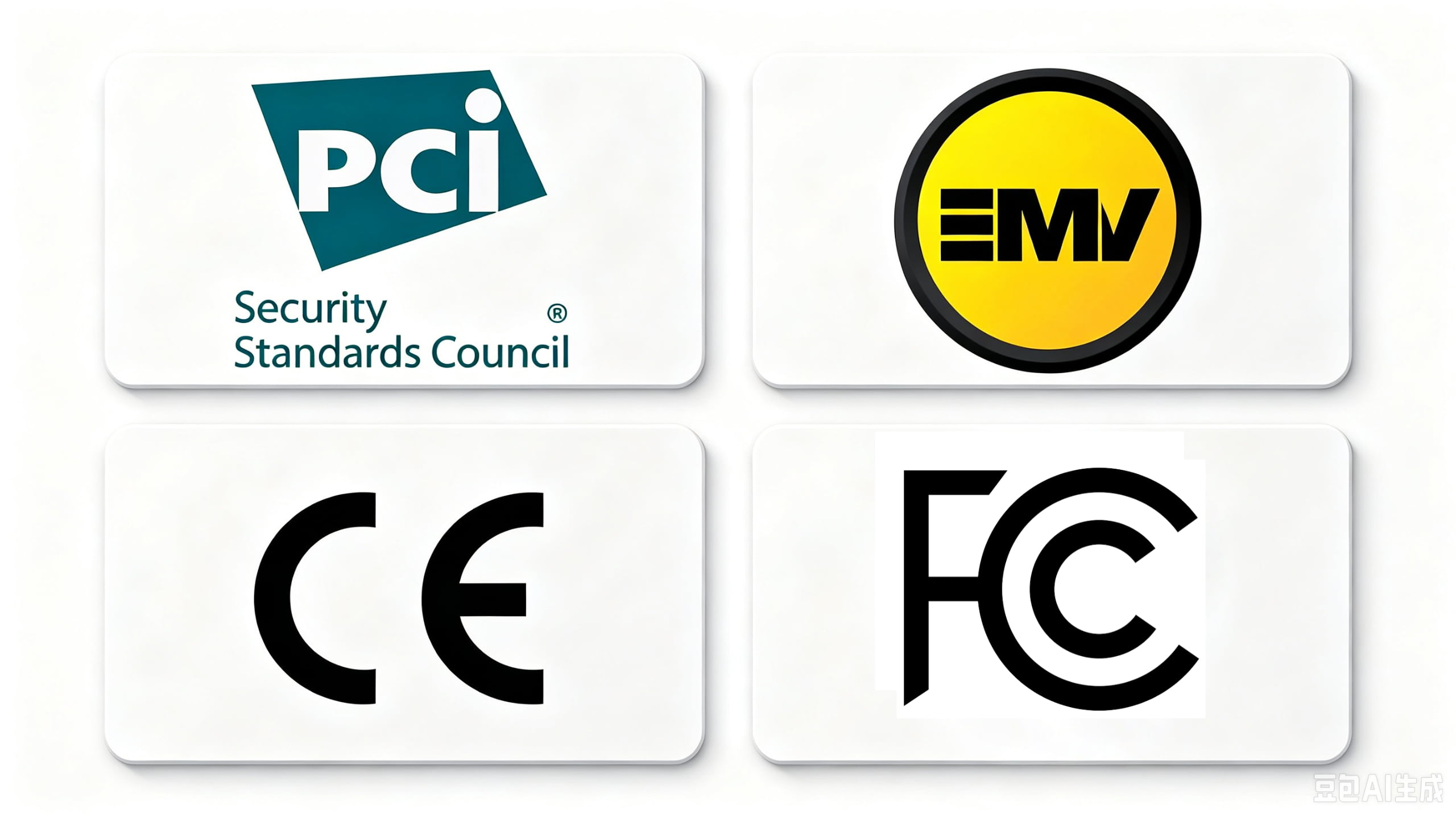
Table of Contents
1. Payment Security Certifications (The Non-Negotiables)
If your POS hardware processes physical credit or debit cards, payment security certifications are legally mandated by major card networks (Visa, Mastercard, Amex).
PCI PTS (PIN Transaction Security)
While PCI DSS applies to your software and network, PCI PTS applies directly to the physical hardware (specifically PIN pads and smart POS terminals).
- What it does: Ensures the hardware is tamper-evident and tamper-responsive. If a hacker attempts to pry open the card reader to install a skimmer, the device will instantly wipe its encryption keys, rendering it useless.
- Current Standard: PCI PTS 6.x is the latest benchmark. Terminals running older 4.x standards are being phased out.
EMV Level 1 and Level 2
EMV (Europay, Mastercard, and Visa) is the global standard for chip cards. EMV certification is split into distinct levels:
- EMV Level 1 (Hardware/Physical): Certifies the physical interface. It ensures the slot accurately reads the chip (Contact L1) and the NFC antenna accurately reads contactless signals (Contactless L1) without electrical interference.
- EMV Level 2 (Software Kernel): Certifies the firmware (kernel) that processes the transaction data logic. It ensures the terminal communicates correctly with the card's microchip.
- EMV Level 3 (Integration): Certifies the final connection between your POS software, the terminal, and the acquiring bank.
The Contactless Era: PayPass & payWave
Beyond standard EMV, terminals must pass brand-specific contactless certifications, such as Mastercard PayPass, Visa payWave, and Amex ExpressPay, to accept tap-to-pay and mobile wallets (Apple Pay, Google Pay).

2. Electrical & Environmental Safety Standards
Even if your device doesn't take payments (e.g., an industrial mini PC or KDS screen), it must pass strict regional safety regulations before it can cross customs borders.
FCC (USA) and CE (Europe) ensure electromagnetic compatibility (EMC). They verify that your POS terminal’s Wi-Fi, Bluetooth, or 4G signals won't dangerously interfere with other electronic devices, and that the device won't fail under normal static electricity.
RoHS (Restriction of Hazardous Substances) guarantees the hardware is manufactured without toxic materials like lead or mercury. Essential for European markets and increasingly required worldwide for eco-compliance.
3. Operational & Software Standards
GMS (Google Mobile Services)
For Android POS systems, GMS certification is a major differentiator. A GMS-certified terminal has Google's official stamp of approval.
- It grants legal access to the Google Play Store and Google APIs (Location, Push Notifications).
- It guarantees compatibility with leading MDM (Mobile Device Management) platforms like SOTI MobiControl or VMware Workspace ONE.
- Without GMS, ISVs must manually sideload APKs, which complicates mass deployment and software updates.
4. The Cost and Time of Sourcing Certifications
Many ISVs and startups make the mistake of trying to build and certify a payment terminal from scratch. The reality of hardware certification is daunting:
- Time to Market: Achieving full PCI PTS and EMV L1/L2 certifications typically takes 6 to 12 months.
- Financial Cost: Lab testing, auditing, and certification fees can easily range from $50,000 to $200,000 per device model.
- Failure Risk: If a device fails an EMV test, hardware adjustments must be made, and the testing cycle (and fees) start over.
The OEM Advantage: This is why leading software vendors partner with established OEM/ODM manufacturers. By white-labeling pre-certified hardware, ISVs bypass the massive upfront costs and launch their proprietary payment solutions in a matter of weeks, not years.
Deploy Fully Certified Hardware Today
From the PCI-certified SN-H50 Smart POS to CE/FCC-approved kiosks, SynqNode provides global-ready retail hardware for your software.
Discuss Your Hardware Project5. Key Questions for Your Hardware Manufacturer
Before signing a hardware contract, demand transparency regarding certifications. Ask your supplier:
Legitimate EMV and PCI certifications can be verified on official databases using the manufacturer's provided registration ID.
A CE mark allows entry to Europe, but the US requires FCC. Japan requires TELEC. Ensure the hardware meets your exact target market's legal framework.
Remember, L3 is integration. Your software and the payment processor/acquirer usually need to drive the L3 certification process, though the hardware provider should supply the certified L2 kernels to make it happen.
Frequently Asked Questions
Is PCI DSS the same as PCI PTS?
No. PCI DSS applies to the software, network, and company policies handling cardholder data. PCI PTS applies directly to the physical hardware terminal and its ability to resist physical tampering.
Do I need EMV certification if I only accept NFC/Apple Pay?
Yes. Contactless payments like Apple Pay and Google Pay use the EMV Contactless protocol. Your terminal will still need EMV Level 1 (Contactless) and the respective brand certifications (PayPass, payWave).
What happens if I import uncertified POS hardware?
Hardware lacking basic safety certifications (FCC, CE, RoHS) will likely be seized by customs. If it lacks PCI/EMV certifications, payment processors will refuse to connect to it, and you assume 100% liability for any fraudulent transactions.